Matching Fragrance with Personal Style
Translate qualities you enjoy in clothes into useful questions about scent.
Published 2026-10-14 · Fragrentis editorial team2 min read
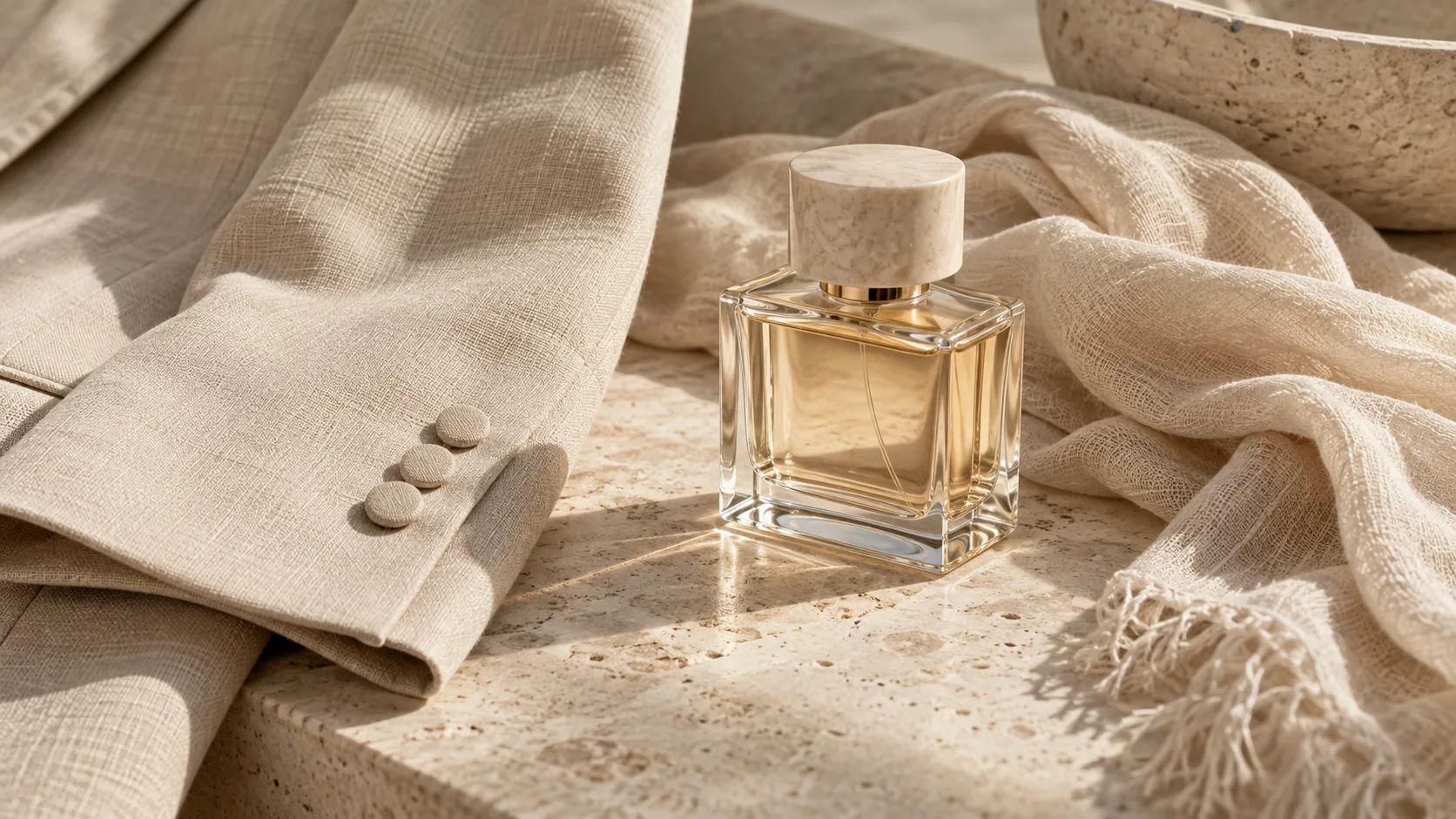
Fragrance can sit alongside personal style without needing to match an outfit literally. A dark jacket does not require a dark-smelling perfume, and a linen shirt does not require citrus. Start with the qualities you enjoy in clothes and ask whether any of those words are useful when describing scent.
Translate a quality, not an aesthetic label Choose two words you use for your wardrobe: restrained, playful, textured, simple, polished or relaxed. Then consider what each means to you. “Restrained” might mean a small range of familiar choices; it need not mean a perfume with weak performance. “Playful” might mean an unexpected contrast rather than a sweet note list.
Avoid turning visual imagery into evidence of smell. A bottle's color and campaign photograph can suggest a mood, but they do not establish the experience of the finished fragrance. Make a short list of what the presentation leads you to expect, then keep that list separate from what you perceive in a sample.
Use a contrast exercise Pick a familiar outfit and two existing fragrance candidates. On different suitable occasions, try each and record whether the choice felt coherent to you. The question is personal fit, not whether a perfume objectively matches a fabric. Respect shared-space preferences and the product directions in either case.
An invented comparison might read: “The brighter choice felt like a useful contrast; the softer one felt more familiar.” Both can fit the same outfit for different reasons. Write which you wanted to repeat instead of deciding that one pairing is correct. A style exercise is useful when it broadens your choices, not when it adds another rule.
Keep the person ahead of the presentation If you enjoy a scent whose bottle or marketing seems unlike your usual style, give the actual experience more weight. Conversely, an appealing campaign does not require you to enjoy the perfume. You do not need to become the person in a photograph to wear what suits your preferences.
Build a small vocabulary of connections that have worked: soft texture, a crisp contrast, an understated familiar choice. Let it remain descriptive rather than prescriptive. Personal style develops through repeated preferences, and fragrance can be one of them. It does not need to announce an identity at a distance or turn every outfit into a carefully coordinated scent statement.
A Fragrentis editorial publication. Editorial policy and disclosure.