Give the Fragrance Shelf a Temporary Waiting Area
Try a reversible shelf edit before making permanent decisions about the collection.
Published 2026-10-15 · Fragrentis editorial team2 min read
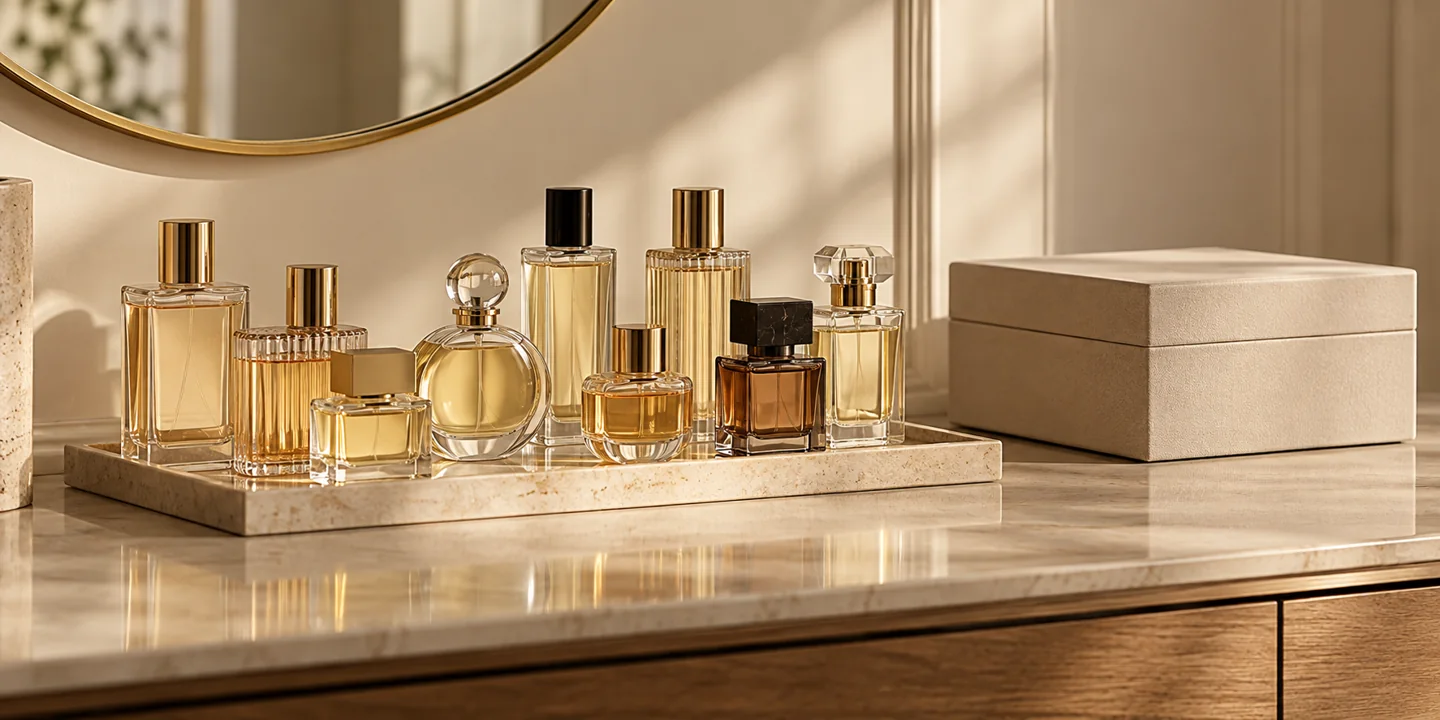
An overcrowded shelf does not always need an immediate clear-out. You may simply want to see which bottles you reach for when the rest are out of the way. A temporary edit gives you that information without turning every item into a decision about keeping or discarding it.
Choose a small active area
Set aside one manageable space for the bottles you currently want to use. There is no required number. Choose according to the room you have and your real routine, rather than arranging an impressive collection for a photograph.
The other bottles can stay in a suitable storage place you already use. Keep a short list of where they went. This is a waiting area for decisions, not a reminder that you must buy organizers or replace your furniture.
Make the pause easy to reverse
Avoid labels that make the outcome sound final. “Outside the active rotation for now” is enough. If you want a bottle back, return it to the active area and note what occasion made you look for it.
Keep practical information with any item whose identity is difficult to remember. A sample vial with no readable label is a different problem from a full bottle you simply have not used recently. Do not combine sorting your shelf with guessing what an unidentified sample contains.
Review what changed in your routine
After a period that suits you, ask whether the smaller visible group made choosing easier. Which bottle did you bring back? Which one did you expect to miss but did not reach for? You can record the answers without claiming that you have discovered a permanent rule about your taste.
Decide about the waiting area when you have a reason to, rather than setting a deadline that forces a rushed clear-out. If you later sell, give away or discard something, check the appropriate requirements separately.
The useful result is a shelf that helps you enjoy what you already own. Empty space can be part of that arrangement; it does not have to announce a new purchase or a perfectly minimal lifestyle.
Give the waiting area a simple record
A handwritten line is enough: item, location and the reason it left the active shelf. “Kept with the other occasional-use bottles; want to revisit for a weekend” gives you a route back. Avoid recording imagined future occasions for everything just to justify keeping it. You can also leave the reason blank and return to the question later. The temporary arrangement should make decisions easier, rather than create another collection of chores.
A Fragrentis editorial publication. Editorial policy and disclosure.